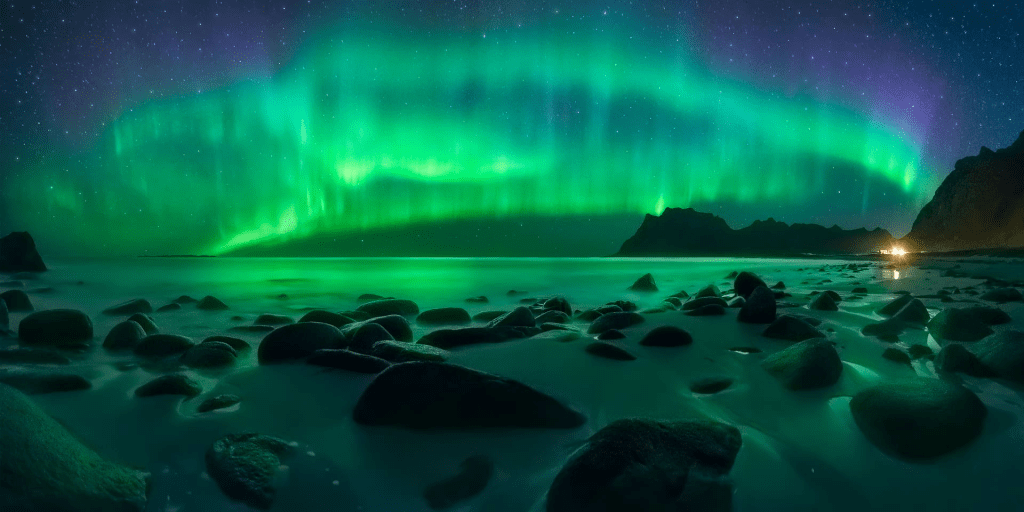
The night sky has always been a canvas of wonders, captivating human imagination with its celestial display. Among the many mesmerizing phenomena that grace our skies, the Aurora Borealis, or Northern Lights, holds a special place. This breathtaking natural light show, seen in the northern polar regions, has left countless observers spellbound for centuries. In this blog post, we’ll delve into the captivating world of the Aurora Borealis, explaining what it is, why it happens, and how you can witness this enchanting spectacle.
What is the Aurora Borealis?
The Aurora Borealis, often called the Northern Lights, is a celestial phenomenon characterized by a mesmerizing display of colourful lights in the night sky, primarily visible in high-latitude regions, such as the Arctic and sub-Arctic areas. A similar phenomenon, known as the Aurora Australis, or Southern Lights, occurs in the southern polar regions. The name “Aurora” is derived from the Roman goddess of dawn, and “Borealis” refers to the north, making it the “dawn of the north.”
Why Does the Aurora Borealis Occur?
The Aurora Borealis is the result of complex interactions between the solar wind and Earth’s magnetic field, shown in the diagram and descriptions below.
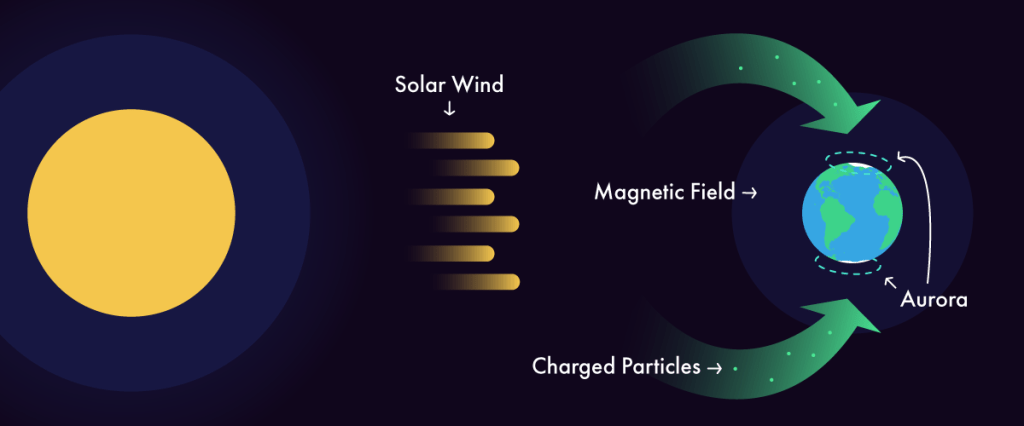
Solar Wind: The Sun constantly emits a stream of charged particles, mainly electrons and protons, known as the solar wind. Occasionally, the Sun releases a burst of solar activity, creating a surge in the solar wind.
Earth’s Magnetic Field: Earth has a powerful magnetic field, like a giant invisible shield, which deflects most of the solar wind away from our planet.
Magnetic Reconnection: When the solar wind carries a particularly strong charge, it can disrupt the Earth’s magnetic field. This triggers a process known as magnetic reconnection, causing the charged particles from the Sun to interact with Earth’s magnetic field.
Auroral Emissions: When these charged particles collide with the gases in Earth’s upper atmosphere, such as oxygen and nitrogen, they energize the gases. As the energized gases return to their normal state, they release energy in the form of vibrant colours, creating the dazzling light display we know as the Northern Lights.
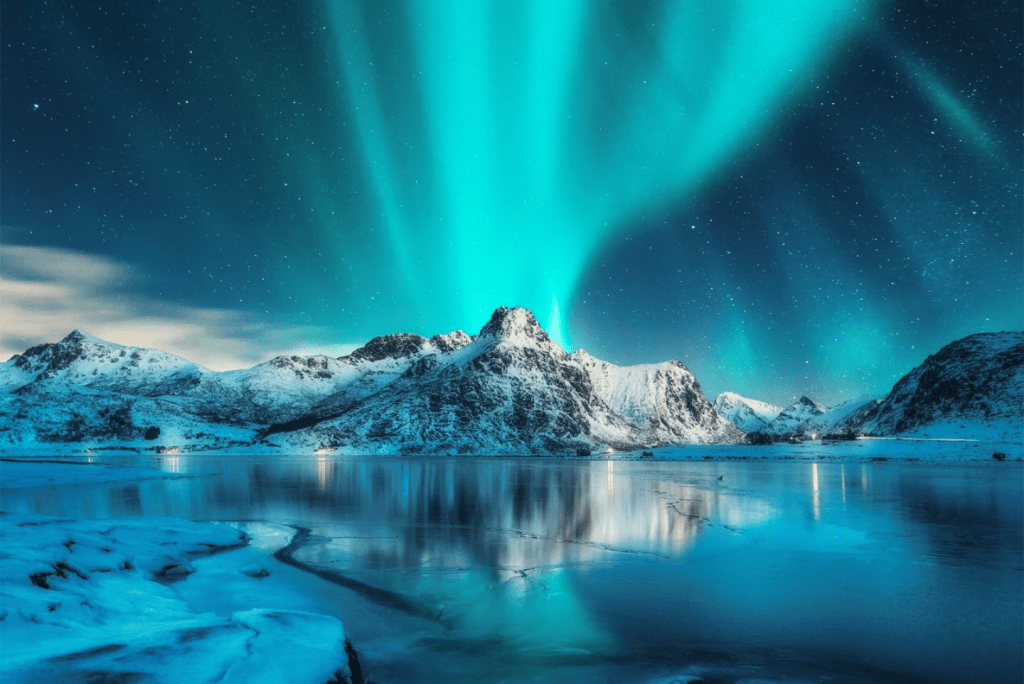
The colours of the Aurora Borealis can vary, depending on the type of gas involved. Oxygen typically produces green and red hues, while nitrogen can result in shades of purple and blue.
How to Witness the Northern Lights
Seeing the Aurora Borealis in all its glory is a dream for many. To increase your chances of experiencing this enchanting phenomenon, here are some tips:
- Location Matters: Plan your trip to high-latitude regions near the Arctic Circle, such as Norway, Iceland, Alaska, Canada, or Sweden. These areas offer the best chances of witnessing the Northern Lights.
2. Timing is Crucial: Visit during the winter months when the nights are longest, increasing your chances of witnessing the Aurora Borealis. The peak season is typically from September to March.
3. Clear Skies: Check the weather forecast and choose a night with clear skies to maximize your chances of viewing the lights.
4. Stay Away from Light Pollution: Go to remote locations, away from city lights and light pollution, to get the best view of the Northern Lights.
5. Patience and Perseverance: Seeing the Aurora Borealis is not guaranteed, so be patient and stay out late, as the lights can be unpredictable.
The Aurora Borealis, with its mesmerizing dance of vibrant lights in the northern skies, remains one of nature’s most extraordinary spectacles. Understanding the science behind this phenomenon and choosing the right time and place to witness it can make your experience truly magical. So, if you’re yearning for a celestial adventure, plan your trip to the northern polar regions, and keep your eyes on the night sky for the chance to witness the ethereal beauty of the Aurora Borealis.



 Diverse Domain
Leave a comment