Embark on a journey through the annals of history as we unravel the captivating tales behind the Seven Wonders of the Ancient World. These extraordinary feats of human ingenuity and craftsmanship, scattered across the ancient landscapes, have fascinated generations with their sheer magnificence and awe-inspiring stories. From the majestic Great Pyramid of Giza to the legendary Hanging Gardens of Babylon, each wonder carries a unique narrative that echoes the brilliance and aspirations of civilizations long past. Join us in this exploration as we step back in time, peeling back the layers of mystery to reveal the architectural marvels that once defined the grandeur of our ancient world.
The Great Pyramid of Giza (Egypt)
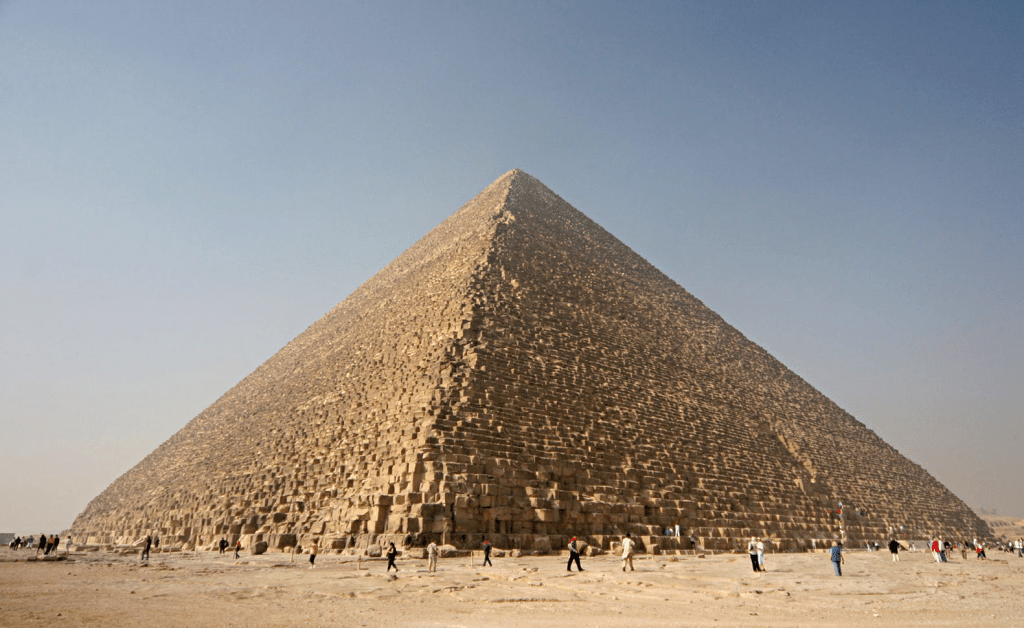
In the heart of Egypt’s vast desert, the Great Pyramid of Giza stands as a timeless testament to the ingenuity and mastery of ancient craftsmanship. Built over 4,500 years ago during the reign of Pharaoh Khufu, this colossal structure is the last surviving wonder of the ancient world. Rising majestically to a height of 146 meters, the Great Pyramid was an architectural marvel that baffled historians and engineers for centuries.
Constructed with precision-cut limestone and granite blocks, the pyramid’s sides align precisely with the cardinal points of the compass, showcasing an extraordinary understanding of astronomy and geometry. The sheer scale of this monument is staggering, with an estimated 2.3 million stone blocks meticulously arranged to form its imposing structure.
Beyond its monumental size, the Great Pyramid carries an air of mystery and intrigue. Scholars debate the methods used to transport and position the massive stones, while the purpose of its construction continues to be a subject of speculation. Was it a grand tomb for Pharaoh Khufu, a celestial observatory, or perhaps both?
As the lone survivor of the Seven Wonders, the Great Pyramid of Giza stands as a silent witness to the passage of time, inviting modern-day explorers and historians to marvel at the ancient world’s unparalleled architectural prowess and to ponder the secrets that still linger within its ageless walls.
The Hanging Gardens of Babylon (Iraq)

Among the Seven Wonders of the Ancient World, the Hanging Gardens of Babylon evoke an ethereal allure, captivating the imagination with their elusive beauty and botanical grandeur. Nestled within the ancient city of Babylon, Mesopotamia, these terraced gardens were said to have been created by King Nebuchadnezzar II for his queen, Amytis of Media, who longed for the lush greenery of her homeland.
The gardens were a marvel of engineering, designed as a series of ascending, tiered platforms adorned with an array of vibrant flora. What set them apart was the ingenious use of an intricate irrigation system that allowed water to flow from the Euphrates River, sustaining the gardens in the arid Mesopotamian climate. Though their existence has been debated among historians, the Hanging Gardens have persisted as an enduring symbol of human creativity and architectural brilliance.
The mystery surrounding these gardens only adds to their mystique. Some historical accounts question their actual location, suggesting they might have been in Nineveh rather than Babylon. Regardless, the Hanging Gardens of Babylon remain a captivating enigma, a testament to the ancient world’s ability to infuse beauty and botanical marvels into the heart of a bustling city, creating a sanctuary of nature amidst the harsh realities of desert life
The Statue of Zeus at Olympia (Greece)
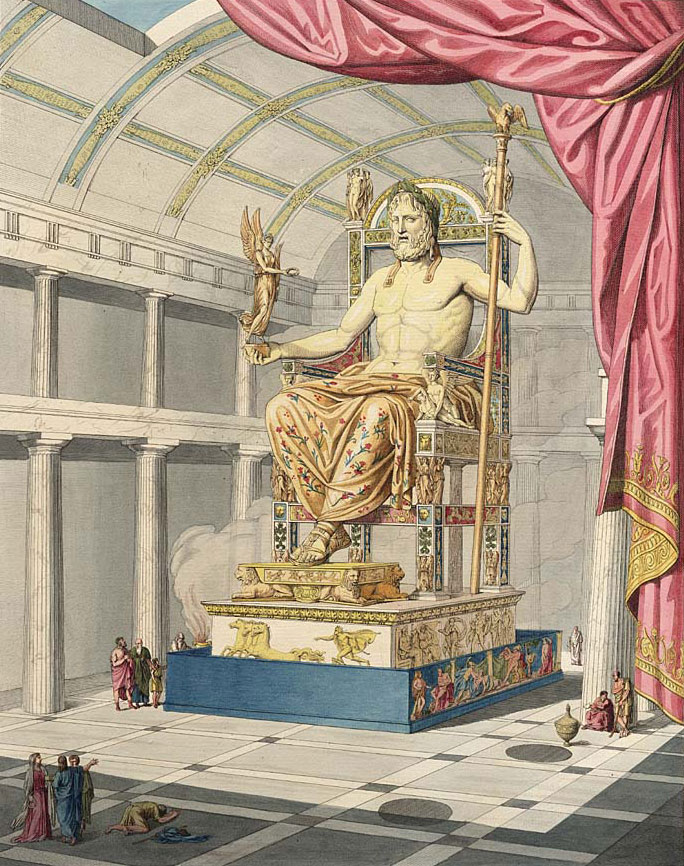
Nestled in the sacred grounds of Olympia, Greece, the Statue of Zeus emerges as a testament to the ancient world’s reverence for divine beauty and artistic prowess. Crafted by the renowned sculptor Phidias around 432 BCE, this colossal masterpiece once graced the Temple of Zeus, standing as a symbol of power and majesty. Towering at over 40 feet in height, the statue depicted the king of the gods, Zeus, seated on a magnificent throne, his countenance radiating both strength and benevolence.
The intricacy of detail in the statue was unparalleled. Zeus’s form was meticulously chiseled from ivory, his robes and accessories adorned with gold and precious stones. The craftsmanship extended to the god’s facial expression, capturing a blend of regality and serenity.
The Statue of Zeus at Olympia not only showcased the artistic acumen of ancient Greece but also embodied a spiritual connection between the mortal realm and the divine. Pilgrims from far and wide marvelled at its grandeur during the ancient Olympic Games, where it stood as a potent symbol of victory and the enduring influence of Greek mythology. Although lost to the ages, the legacy of this extraordinary statue persists, a reminder of an era where art and spirituality converged in magnificent harmony.
The Temple of Artemis at Ephesus (Turkey)
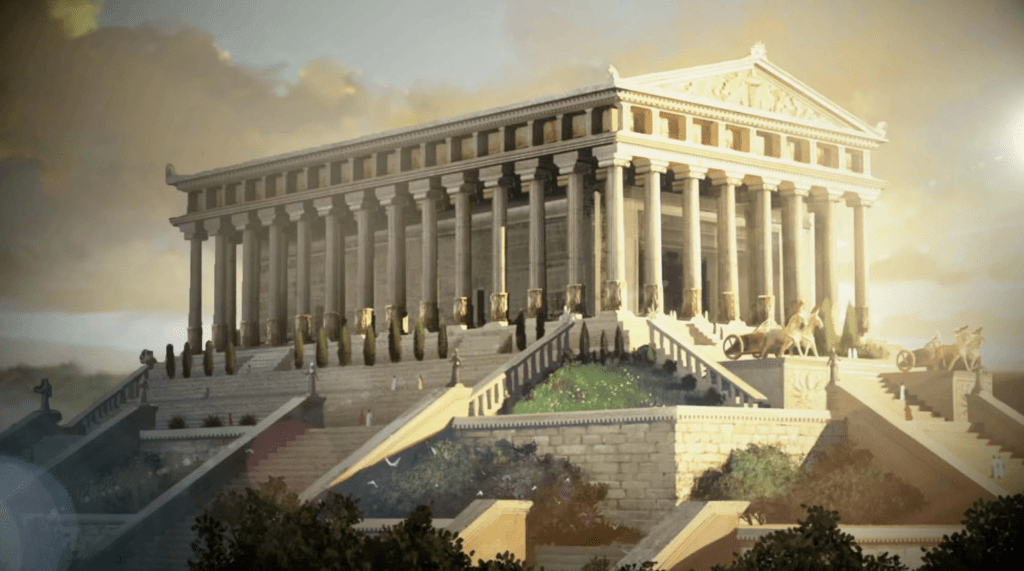
In the ancient city of Ephesus, the Temple of Artemis emerges from the pages of history as a testament to the grandeur of ancient Greek architecture and the veneration of the goddess Artemis. Originally constructed around 550 BCE, this monumental temple was dedicated to the goddess of the hunt, wilderness, and fertility. Reputed as one of the Seven Wonders of the Ancient World, the Temple of Artemis stood as a beacon of religious devotion and architectural splendour.
Its impressive dimensions, adorned with intricate sculptures and ornate columns, marked it as an unparalleled achievement. The temple’s 127 columns, each towering over 18 meters in height, formed a majestic colonnade around the sanctuary. The grandeur of the temple extended to its interior, housing a remarkable statue of Artemis crafted by renowned sculptors.
Despite its grandeur, the Temple of Artemis faced several calamities, including arson by a Herostratus and later, destruction by invading forces. Today, the site stands as a haunting reminder of the transient nature of even the most magnificent structures. Nevertheless, the legacy of the Temple of Artemis endures in the echoes of ancient hymns and the stories of a sanctuary that once embodied the devotion of a civilization to its revered goddess.
The Mausoleum at Halicarnassus (Turkey)
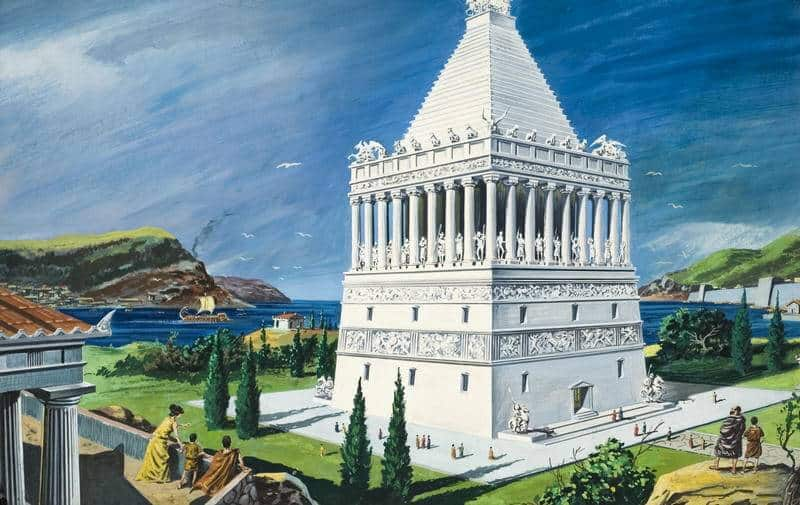
In the ancient city of Halicarnassus, the Mausoleum stood as a testament to love and commemoration. Commissioned by Artemisia II in memory of her husband Mausolus, the satrap of Caria, this architectural marvel became known as the Mausoleum at Halicarnassus. Completed in 353 BCE, it was a fusion of Greek, Egyptian, and Lycian architectural styles, creating a structure that epitomized the grandeur of the Hellenistic era.
Rising above the city skyline, the Mausoleum was a majestic tomb adorned with intricate friezes, statues, and a stepped pyramid crowned by a colossal chariot. Sculptors such as Scopas, Leochares, and Timotheus contributed to the artistic tapestry that enveloped this monumental structure.
The Mausoleum’s historical significance transcends its physical splendor. It gave rise to the term “mausoleum,” becoming synonymous with grand burial structures. Despite facing earthquakes and the passage of time, remnants of the Mausoleum have been unearthed, offering glimpses into the architectural opulence of ancient Caria.
The legacy of the Mausoleum at Halicarnassus persists, not only in archaeological fragments but also in the enduring influence it exerted on subsequent monumental tombs and mausoleums, reflecting a bygone era’s reverence for love immortalized in stone.
The Colossus of Rhodes (Greece)
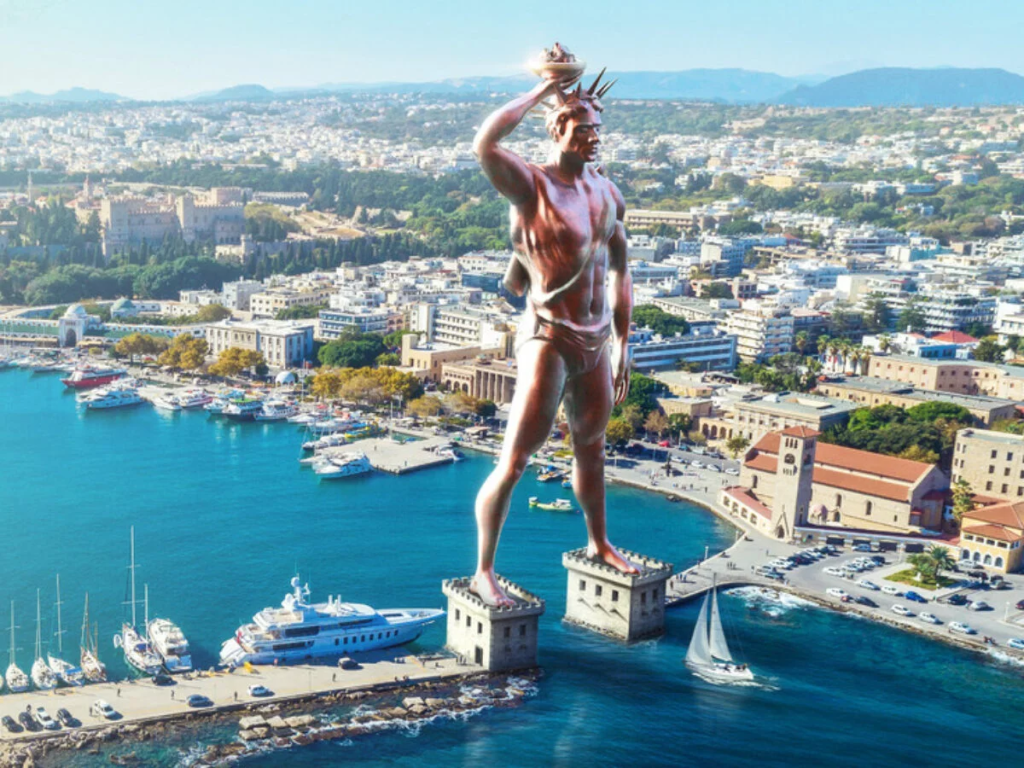
Standing proudly at the entrance of the harbor of Rhodes, the Colossus of Rhodes embodied the spirit of ancient Greek ingenuity and maritime prowess. Erected around 280 BCE to commemorate the successful defense of the island against an invading force, this colossal bronze statue of the sun god Helios mesmerized onlookers with its sheer magnitude and artistic brilliance.
Crafted by the sculptor Chares of Lindos, the Colossus stood over 30 meters tall, a radiant symbol of victory and divine protection. Straddling the harbor’s entrance, its legs formed monumental gateways through which ships sailed, a spectacle that must have left a lasting impression on ancient mariners.
The Colossus of Rhodes, although short-lived, represented the synergy of art and engineering in the Hellenistic era. Unfortunately, a devastating earthquake in 226 BCE caused the statue to collapse, leaving it in ruins. Despite its relatively brief existence, the Colossus endured in the collective memory of antiquity as a symbol of resilience and the indomitable spirit of the people of Rhodes.
Today, while the Colossus itself is lost to time, the aura of its colossal presence lingers in the maritime history of Rhodes, a testament to the island’s enduring legacy as a guardian of the seas.
The Lighthouse of Alexandria (Egypt)
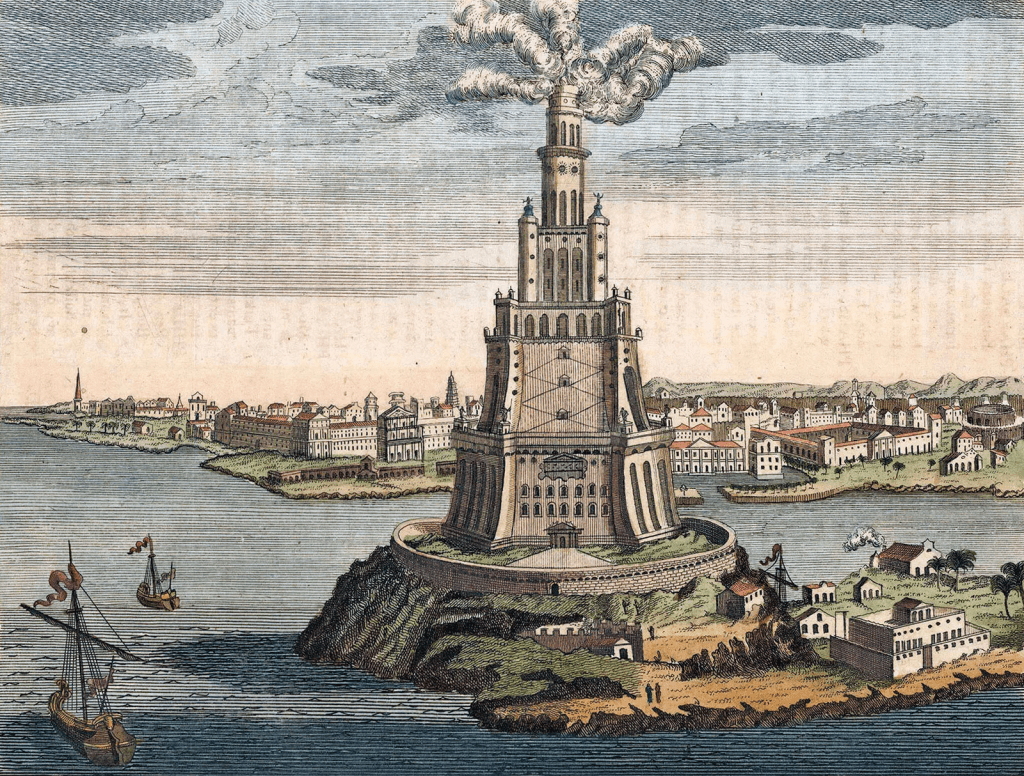
Perched on the island of Pharos, the Lighthouse of Alexandria emerged as a beacon of maritime brilliance in the ancient world. Constructed around 280 BCE by the renowned architect Sostratus of Cnidus, this towering structure stood as a testament to the technological prowess of the Hellenistic era. Rising over 100 meters, it was a marvel of ancient engineering, designed not only to guide sailors safely into the bustling port of Alexandria but also to astound with its architectural grandeur.
The Lighthouse of Alexandria, also known as the Pharos of Alexandria, housed an open flame at its summit, fueled by a blend of wood and other combustible materials. This radiant beacon, visible from miles away, served as a guiding light for seafarers navigating the treacherous waters of the Mediterranean.
While earthquakes and time have claimed this architectural wonder, its legacy endures in the term “Pharos,” synonymous with lighthouses in many languages. The Lighthouse of Alexandria remains an iconic symbol of Alexandria’s historical significance as a vibrant centre of trade and culture, where the convergence of art and engineering illuminated the ancient world’s maritime pathways.




 Diverse Domain
Leave a comment